
What you will learn
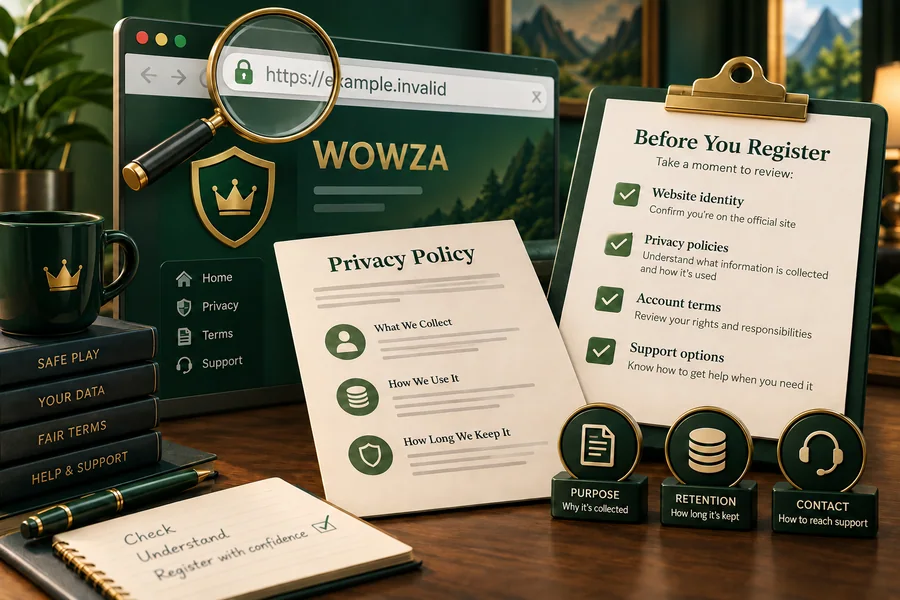
- Check the destination before sharing personal information.
- Read privacy and account terms first.
- Check support and account-closure options.
Match the brand and destination
A sign-up page can use familiar game artwork or a studio-like name without belonging to that studio. Before entering information, compare its domain, named business and contact details with the original source. A recognisable logo does not tell you who will receive your details.
HTTPS helps encrypt a connection but does not establish business quality or every claim on a website. Identity and terms still matter.
Understand how information will be used
Before entering a name, phone number or document, identify the controller, purpose, retention period and privacy contact. Requests for unrelated account passwords or OTPs through chat should be checked through an official channel.
| Item | Expected information | If missing |
|---|---|---|
| Identity | Business and contact details | Check original sources first |
| Privacy | Purpose and controller | Read the complete policy |
| Account terms | Territory, age and closure | Request a documented explanation |
Read the rules attached to the account
Age, service territory, identity checks, duplicate accounts, account closure and promotional conditions are separate issues. Read them individually and keep a record of questions and verifiable answers.
- Know the business and the version of its terms.
- Distinguish service consent from marketing preferences.
- Locate support and account-closure information.
Frequently asked questions
Does HTTPS establish a website’s credibility?
HTTPS encrypts the connection. You still need to check the business, contact details and account terms.
What should I check before sharing documents?
Check the recipient, purpose, retention period and privacy contact before sending documents.
Sources
Last checked 10 October 2026